Blog · Trade Shows · October 5, 2026
CES, NRF, HIMSS, RSAC: what to lock in October
The booth video math for the Q1 show season, counted back from doors open: what still fits for January, what October buys you for April, and the one mistake we see on every floor.
4 min read · Moonshine Media Group
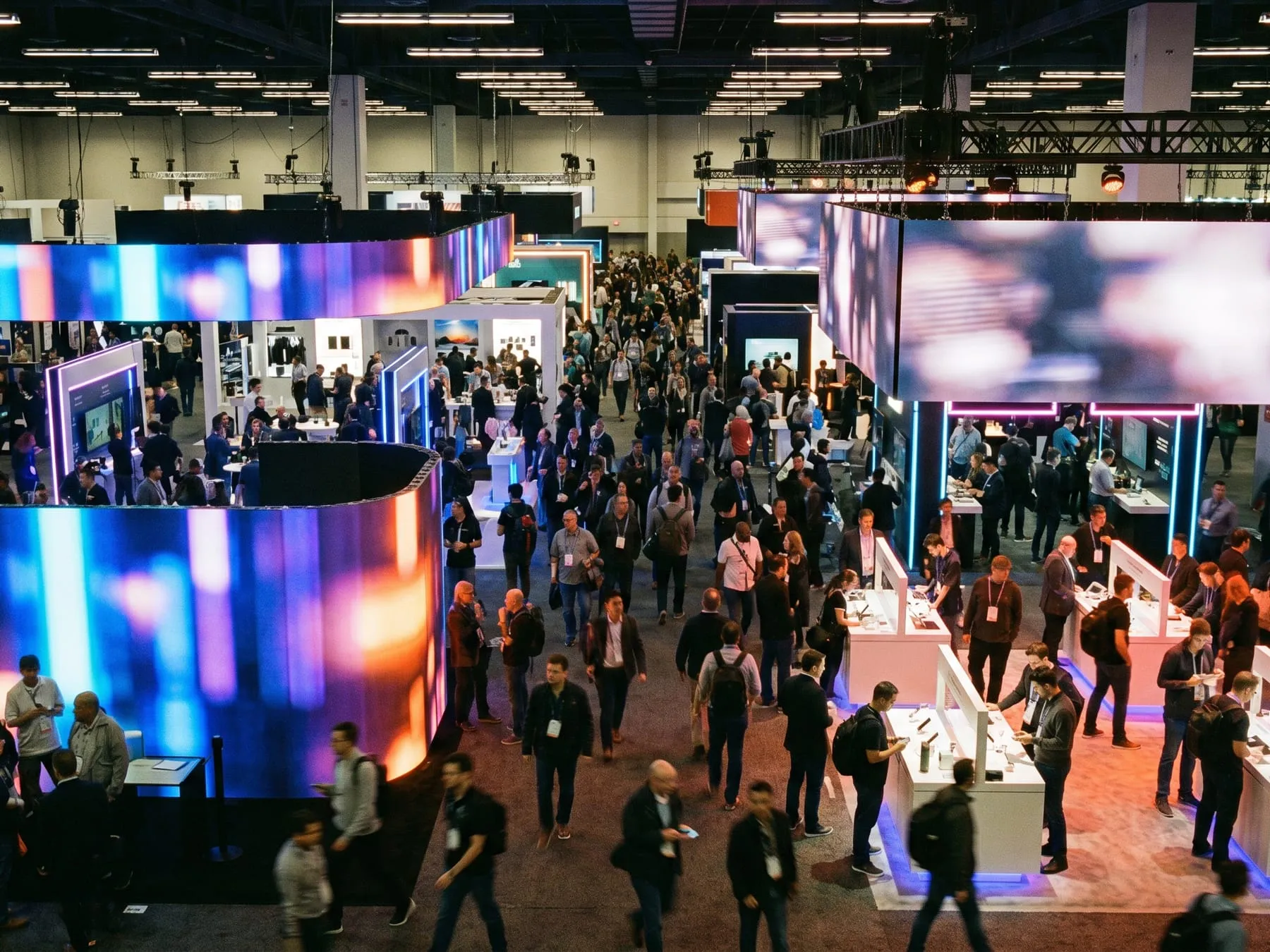
Every January show is decided in October. Not the booth, that was signed months ago. The thing on the screens. Here is the calendar we run for trade show video production, counted back from doors open, so you can see what is still possible this month and what has already turned into a rush.
The clock we work to
Every piece runs on the same clock: planning, script, storyboard, then animation or filming, three weeks a stage, with one approval at the end of each. We hand over finished files two weeks before doors open, cut to the exact pixel dimensions your exhibit house specifies, because a wall with an odd aspect ratio is not the place to discover a crop. That is twelve weeks of work plus two of buffer for a full piece. A simple silent loop is faster: four to six weeks from script to delivery.
Those two numbers are all you need to read the season.
January: what still fits
CES opens January 6 in Las Vegas. NRF Big Show opens January 10 in New York. Count back two weeks for delivery and both have files due before Christmas.
From the first week of October, that leaves about eleven working weeks. A full animated explainer on the twelve-week clock is already a rush, which is a line item on the quote, not a surprise. A booth loop is not a rush at all. Kick off a 15 to 45 second loop any time before the middle of November and it lands with room to spare.
So if you exhibit in January and nothing has been started, the honest advice is: make the loop, make it great, and let the longer explainer run on its own schedule for the spring. The loop is the piece that does the work on the floor anyway.
April: what October buys you
HIMSS in Chicago and RSA Conference in San Francisco both open April 5. Files are due around March 22. A full piece on the twelve-week clock has to start by the last week of December, and nobody starts anything the last week of December.
Kick off in October or November and you get the whole process at a walking pace: a script you have time to argue about, a storyboard the sales team actually reviews, and a render that is not the night before the truck leaves. Same price as a rush, with better work. If your spring show is a bigger bet for you than your winter one, this is the month to book it.
The mistake we see on every floor
Ian’s take, after a lot of expo halls: most booth video is not flashy enough, and the shots do not contrast with each other enough to catch an eye that is already moving. A busy hall is a wall of motion. A loop with one steady palette, one steady pace, and slow dissolves between similar frames disappears into it, however beautiful it looks on a laptop.
What catches people is change. Big type against a dark frame, then a bright product shot, then a hard cut to a single word. High contrast, kinetic typography, one claim per cycle, and motion that never stops. Look at your current loop with the sound off, from across the room, and ask whether anything in it would make a stranger turn their head. That is the whole test. (The cost post has the numbers for each kind of booth piece if you are sizing the decision.)
What to send us this week
If you want to make October count, the kickoff needs five things, and none of them are creative:
- Screen specs from your exhibit house. Pixel dimensions, aspect ratio, and whether the wall has a bezel or a seam. Vendors publish these on the booth drawings.
- The one claim. The single sentence you would want a passerby to remember. Not the three pillars, the one.
- Who is on the floor. Loop plays to the aisle. An explainer plays to the person your rep is already talking to. They are different pieces.
- References. Two loops you liked at the last show and one you hated. The hated one tells us more.
- Any product footage or UI you already own. It changes the quote in your favor.
With those in hand we can start the loop this week and have the explainer scheduled for the show where it will matter most. If your plan also includes something people can touch, the interactive booth page explains how that fits the same clock.
Tell us which show you are exhibiting at and we will send back a dated plan the same day.