Healthcare video production people can trust.
Patient stories, provider films, health tech explainers, and campaign spots for hospital systems, medical companies, and digital health teams. Consent handled properly, clinical detail kept accurate, and a film that makes someone feel safe enough to book.















Trust is the whole job.
A healthcare video has one audience that is nervous and another that is skeptical. The patient wants to know they will be treated like a person. The clinician, the administrator, or the regulator wants every claim to be exactly right. The film has to work for both, in the same ninety seconds.
We do that with real people instead of stock, plain language instead of jargon, and a review step built into the schedule so your compliance team sees the cut before the public does.
Our healthcare work spans a hospital system, a biomaterials company, a telehealth service, and a chronic pain app. Different buyers, same standard: nothing on screen we cannot stand behind.
Proof
Made for health and care.
A digital health customer story, a telehealth broadcast spot, and, from our nonprofit work, the interview craft that patient and provider films are built on. Click any of them.


Transcripts
Read what the videos above say. Speaker names are from the films; the text is lightly cleaned from the spoken word.
Curable Groups: a customer story
Laura Seago, co-founder of Curable: Hi, I'm Laura Seago and I'm one of the co-founders of Curable. I cannot wait for you to experience Curable Groups. To explain more about Curable Groups, I have brought with me two of the experts you could be working with in the program, Jane Risley and Allison Akhnoukh. Allison, one of the really unique things about the Curable Groups program is that it combines three different, very powerful approaches. You have this group healing aspect, expert support, and what we call guided introspection. Why is it that you think that addressing recovery from all of these angles is so important?
Allison Akhnoukh: So all the best practice in education right now is pointing towards what we call a flipped learning model. And what that means is you have the opportunity to digest high-quality content on your own, do some exercises to reflect against that, and then come together in a small group setting to continue to solidify your learning. What's important to emphasize, however, is that all three pieces really need to work together. And when they do, it's very powerful.
Laura Seago: As you both know, once someone joins the Curable Groups program, they're going to become a part of this tight-knit group of ten chronic pain sufferers who meet weekly to discuss their healing. And those groups are going to be joined by two expert facilitators, of which you are two. So, Jane, you've had experience with small groups in the past. What has that been like, and why do you think that this group setting is so effective for healing?
Jane Risley: I feel that small groups are an invaluable tool in the healing process. For ten years, I was the facilitator for small groups dealing with domestic violence and sexual assault. I saw so much healing going on in those rooms. So, when I decided to embark on a journey to heal my chronic pain, I actually sought out a model that would involve small groups. And I found it, and I was very successful with it and loved it.
Laura Seago: In addition to these small healing groups, everyone who participates in the program is going to have access to a monthly group session with one of Curable's advisory board physicians. Now, Jane, you had access to Dr. Strax, who is one of the physicians they will interact with during the program. What did having a credible physician involved in the process do for you?
Jane Risley: It was important to me to have a physician's seal of approval on the path I had chosen. It empowered me and gave me confidence in the process.
Laura Seago: So, we've gone over the group healing component and the expert support component. The only component we haven't really covered is this guided introspection. And that's going to come in the form of 90-minute video workshops that are designed to help people really dig deep and reflect on what's going on for them. You have both had a chance to experience these workshops on your own. Allison, what do you think these workshops are going to unlock for people?
Allison Akhnoukh: So, what's so fabulous about these workshops is that they really give you the time and a safe space, taking as much time as you need to really do the exercises and think about what's causing your pain. I also love the fact that you have access to them forever. So, they're always going to be part of your toolkit.
Laura Seago: And to all of the future members of Curable Groups out there, I just want to say welcome to the family. We all can't wait to sit beside you and see what kind of transformation this whole journey brings.
Veriheal commercial
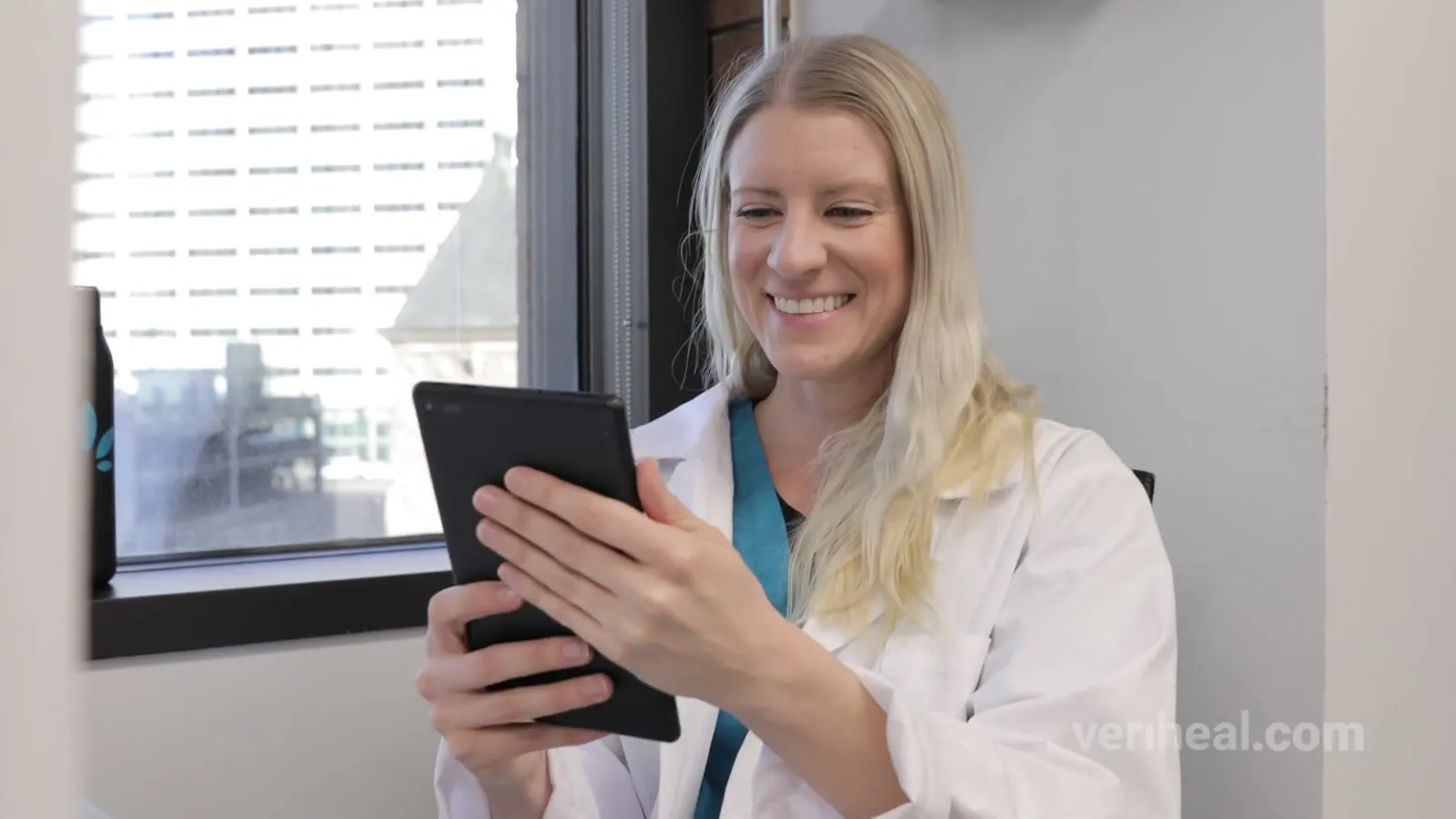
So, I certainly hesitated at first about getting my medical marijuana card. I knew what the advantages were, but there was a lot of unknown. Veriheal helps connect you with a medical professional who can answer your questions. Veriheal has helped over a quarter million patients get their medical cards nationwide. Veriheal helps patients get their medical marijuana card by basically facilitating the whole process.
I would recommend Veriheal to get your card based on the quick access to doctors. You're able to get your money back if you don't get approved. I would tell someone who's considering using Veriheal to stop hesitating and do it. They will put you in touch with a doctor you can trust, and you will end up having a medical marijuana card that's going to benefit you in more ways than you know. Many are curious if they would even qualify. So, why not have the conversation with a medical professional? Get approved, or your money back.
Room to Read founders
The thing that I am most proud of is that Room to Read has done something that no other organization has done before. Starting from being a cash-strapped, unknown organization with very few resources, we've built a global movement. We've scaled, and we've scaled with impact and data and metrics to prove that our organization has the tools needed to change the future forever.
What's key is that, yes, we've reached millions of children with better educational opportunities, but it's also the importance that we're focusing on the quality of that education. Children are learning to read in their local language. They have access to incredible libraries that they never would have had at their schools. And all the girls in our Girls' Education Program have the ability to make their own choices in life, because not only are they completing secondary school, but they're empowered through life skills to be able to determine their future.
I urge everyone that you think big, think something which is even beyond your imaginations.
Room to Read has always been a visionary organization, and in the next five years we're not slowing down. We've set a goal of doubling the number of children that we've benefited. That's reaching 40 million children by 2025.
What we make for healthcare teams
Four jobs, one vendor.
Patient and provider stories
Real patients, clinicians, and care teams on camera, filmed at the clinic or remotely, with consent handled properly and the edit checked against what was said.
Animated and filmed explainers for health tech
Animated healthcare video production for apps, platforms, and devices, explained to the people who buy and use them: administrators, clinicians, and patients. Animated when the product is a screen or a mechanism inside the body.
Commercials and campaign spots
Broadcast and streaming spots for services that need trust before the click, from telehealth to specialty care, with cutdowns for paid social.
Training and onboarding
Policy, procedure, and onboarding films that staff actually watch: short, specific, and versioned as the protocol changes.
Questions
Before you ask.
How much does healthcare video production cost?
Filmed work is quoted per shoot day plus post: a one-day, single-location shoot with a small crew, plus edit, color, sound, and cutdowns, lands around $15,000 for most patient story and provider films. Animated explainers for health tech run $215 per finished second, about $13,000 for 60 seconds. Every quote is fixed after one discovery call.
Which healthcare and medical clients have you worked with?
Centura Health, the Colorado hospital system; Geistlich, the regenerative biomaterials company; Veriheal, the telehealth service for medical cannabis evaluations; and Curable, the chronic pain app. The proof wall above shows the Curable customer story and the Veriheal spot.
How do you handle patient privacy and consent?
Written releases before anyone is filmed, no protected health information on screen or in audio unless the patient has agreed to it in writing, and a review pass with your compliance or communications team before anything is published. We have filmed in clinical settings and know to keep the crew, the cables, and the lens out of the way of care.
Can you explain a clinical product without dumbing it down?
Yes. We have written for security engineers and freight dispatchers; clinicians are the same job with different vocabulary. You tell us what the product does and who has to believe it, we write for that person, and your medical or regulatory reviewer signs off on the script before we animate a frame.
Do you work with agencies and internal comms teams?
Often. Agencies bring us in for production or post on healthcare accounts, and hospital marketing teams use us for the films their in-house crew does not have time for. Same fixed quote, same schedule, your name on the credits if you want it that way.
Tell us who needs to trust you, and by when.
The audience, the setting, and the date. We'll come back with a plan, a consent process, and a fixed quote within two business days.